

For most people educated in the Soviet Union, Lenin’s article ‘Leo Tolstoy as the Mirror of the Russian Revolution’ (1908) was a familiar reference. It was quoted in school textbooks and included in full in university curricula in the humanities and social sciences. In this brief essay, written to mark Tolstoy’s eightieth birthday, Lenin argued that the writer’s philosophical teachings reflected the political immaturity of the Russian peasantry before and during the Revolution of 1905 – the “Russian Revolution” of the title, which Tolstoy had rejected: “In our revolution a minor part of the peasantry really did fight, did organize to some extent for this purpose; and a very small part indeed rose up in arms to exterminate its enemies, to destroy the tsar’s servants and protectors of the landlords. Most of the peasantry wept and prayed, moralised and dreamed, wrote petitions and sent ‘pleaders’ – quite in the vein of Leo Tolstoy!”[1]
From a present-day perspective, Lenin’s analysis appears deeply flawed. His crude sociological method of correlating cultural phenomena with underlying social processes is not surprising for a Russian Marxist of that period. More puzzling is Lenin’s belittlement of the peasantry’s active and often violent participation in the Revolution of 1905, and his choice of a public figure who was neither a peasant nor someone who was sympathetic to the revolution as its symbolic representative. The only explanation is that Lenin deliberately constrains the peasantry’s political options to a choice between Tolstoy and the Bolsheviks. Absent from his account is the success of other groups that were able to engage the peasantry during the 1905 Revolution – most notably the Socialist Revolutionaries and the All-Russian Peasant Union, both conspicuously missing from his text.
A historian of Ukraine would find Lenin’s representation of the peasantry particularly distorted. The year 1905 marked the emergence of the Ukrainian Socialist Revolutionaries as a group distinct from the Russian party, with local organizations bringing together peasant activists and professionals working in the countryside. It also saw the founding of Prosvita educational societies and the growing popular demand for Ukrainian-language schools. Alongside spontaneous outbreaks of violence, there were agricultural strikes organized by socialist activists. Admittedly, not all peasants or members of the radical intelligentsia working in rural areas prioritized the Ukrainian national cause or even identified as Ukrainians. Yet Lenin was certainly aware of the Ukrainian Social Democratic Union (Spilka) and its success in working with the peasantry. A splinter group of the Revolutionary Ukrainian Party that joined the Russian Social Democratic Labor Party as a semi-autonomous entity in 1905, Spilka won six seats in the 1907 elections to the Russian parliament.[2]
These were the stories Lenin sought to erase in his brief article on Tolstoy. Yet a more general problem underlies his analysis: the Russian Bolshevik viewed the peasants as passive recipients of political messages, failed to recognize the specific forms of struggle that they were developing, and ignored the leaders emerging from among them. Lenin’s rejection of the peasantry’s political agency would confront him during the next revolution, that of 1917–1920. Peasant rebels in Ukraine, in particular, taught him some very painful lessons in 1919–1920, when the Bolsheviks finally managed to establish control over most of the Ukrainian lands of the former Romanov Empire. In the short term, these lessons produced concessions to the peasantry’s economic power and to Ukrainian culture; in the long term, however, they contributed to Stalin’s settling of accounts with Ukraine and its peasantry during the genocidal Holodomor of 1932–1933. Yet the agency of the Ukrainian peasantry is still all too frequently overlooked in Western accounts of the “Russian Revolution”.
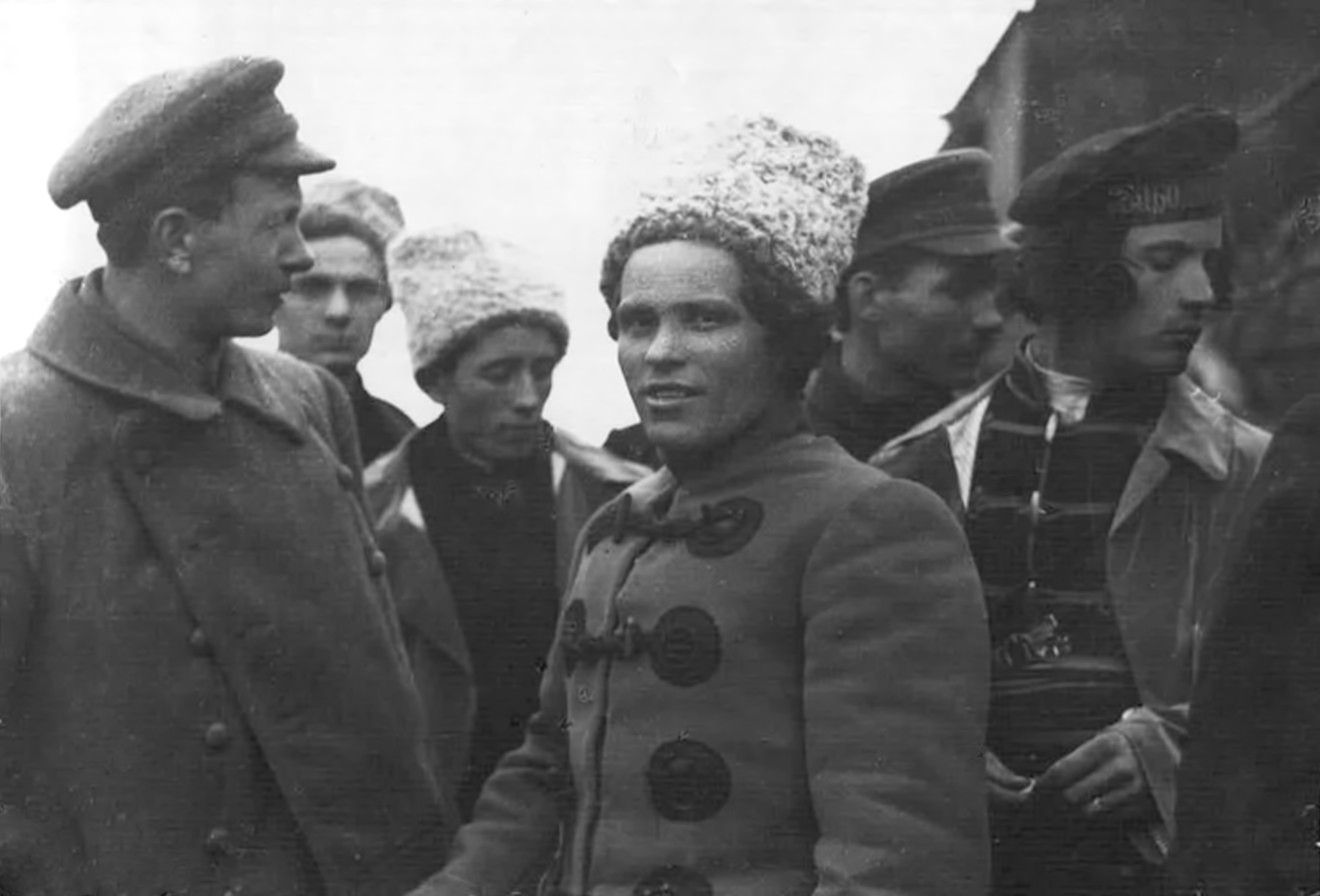
With the methodological shift toward social and cultural history, Western historians of “Russia” in 1917–1920 continued to marginalize the nationalities problem even as they paid more attention to the Bolsheviks’ struggle against the peasantry. The Ukrainian peasant warlord Nestor Makhno enjoyed great popularity in these narratives, but he typically appeared as part of the all-Russian story. A committed anarchist and opponent of any state institutions, he served as a convenient protagonist in a narrative in which Ukrainian state building was dismissed as lacking popular support. Moreover, the story of Makhno’s ultimately untenable resistance to the Bolsheviks implicitly removed the need to discuss the Ukrainian national movement and Bolshevik neo-imperialism. Makhno stood for Ukraine, and the Ukraine he purportedly represented appeared politically inseparable from Russia and incapable of offering a meaningful political alternative to the Bolsheviks’ extreme centralism.
There were few attempts to recover the Ukrainian dimension of the Makhnovist movement by drawing on such sources as the Ukrainian-language diary of Makhno’s spouse, Halyna Kuzmenko. In a pioneering article, Frank Sysyn examined the Ukrainian elements of Makhno’s own identity and his interactions with the Ukrainian governments of the time.[3] Sean Patterson focused on reconstructing the Makhnovists’ understanding of social liberation as inclusive of Ukraine’s national rights.[4] After 1991, Ukrainian historians began to claim Makhno for Ukrainian history as the leader of a peasant movement that caused problems for the Russians, both White and Red. They examined in detail Makhno’s difficult relations with the Ukrainian People’s Republic (UNR).[5]
Since Makhno often functions in Russian-history surveys as an implicit symbol of the revolution in Ukraine, it is worth examining his suitability for this role, using as a foil his nemesis and rival for the title of the nation’s most famous warlord, Nykyfor Hryhoriiv, whom Makhno (or his aide) killed on 27 July 1919.
MAKHNO AND UKRAINE
Where can we position Makhno on the spectrum of identities in revolutionary Ukraine? His ethnic identity is less relevant to this question than his national or political one, but it is still worth considering. Makhno’s family name and the first names of his known relatives indicate Ukrainian ethnicity; it is striking that he himself avoided addressing this question in his extensive autobiographical writings. He does acknowledge, in passing, that he could not speak Ukrainian, which he nevertheless refers to as his native language. While traveling by rail in Ukraine in 1918 during the rule of Hetman Pavlo Skoropadsky, railway officials refused to answer his questions in Russian: “And I, not knowing my own native [ne vladeia svoim rodnym] Ukrainian language, was compelled to mangle it so badly in my interactions with those around me that I felt ashamed”.[6]
How was he not able to speak Ukrainian? Makhno’s birthplace, Huliaipole, was an unusual village. With a population of 7,000 in 1906, it boasted two factories producing agricultural equipment (one of which is still in operation today) and several pottery-making establishments, among some thirty businesses classified as “trade or industrial”. Huliaipole also hosted no fewer than three annual fairs.[7] It was essentially a small industrial and trading town with its own working class composed of locals as well as workers recruited from elsewhere in the Russian Empire.
Huliaipole stood on what had once been the empire’s southern steppe frontier. These prime agricultural lands were opened for colonization after the Russo-Ottoman War of 1768–1774, which saw the Russian conquest of the Crimea. Catherine II and her successors encouraged the resettlement of peasants from other Ukrainian and Russian regions, as well as foreign colonists. The Mennonites was one such (prominent) group in and around Huliaipole, prospering there during the nineteenth century and leading Makhno to see them as “exploiters” of the local peasantry. In such a multiethnic region, minorities tended to embrace the empire’s dominant culture–Russian. The language of the cities and factories was also Russian, with newcomers from the Ukrainian countryside assimilating in order to fit in.[8]
It is thus not surprising that Makhno grew up as a Ukrainian of Russian culture. More important for our purposes, however, is how he understood the choice of his own identity. In his memoirs, he follows his admission of not speaking Ukrainian with a sharp critique, equating the use of Ukrainian with betraying the toilers:
I asked myself: On whose behalf was such mangling of the language demanded of me, when I did not know it? I understood that this demand did not come from the Ukrainian working people. It came from those fictitious “Ukrainians” born under the heavy boot of the German-Austro-Hungarian Junkers, trying to imitate a fashionable tone. I was convinced that such Ukrainians needed only the language, not the fullness of Ukraine’s freedom and that of its working people. Outwardly they posed as friends of Ukraine’s independence, but inwardly they clung – with their Hetman Skoropadsky – to Wilhelm of Germany and Charles of Austria-Hungary and their anti-revolutionary policies. These “Ukrainians” did not understand one simple truth: Ukraine’s freedom and independence are possible only with the freedom and independence of its working people, without whom Ukraine is nothing.[9]
Here and elsewhere in his writings, Makhno implicitly acknowledges Ukraine’s existence. But even though he does not refer to the historical regions of “Little Russia” and “New Russia”, as in tsarist discourse, he remains uneasy with the term “Ukrainians”. For instance, he thus describes the spring 1918 arrival of German and UNR troops in Huliaipole: “[T]he Germans and the Ukrainians entered Huliaipole”.[10] He often uses the term “Ukrainian chauvinists” for the Central Rada and the UNR government, but also refers to them more broadly as the “government of the Ukrainians”.[11]
Makhno claims that his position reflected the attitude of the peasantry, but his choice of language is revealing. He notes that local peasants beat up Ukrainian emissaries “as enemies of the fraternal unity (bratskogo edineniia) of the Ukrainian and Russian people.”[12] After the 1905 Revolution, the term “fraternal unity” was widely used by Russian liberals and socialists, including Lenin, but it essentially restated the tsarist idea that Russians and Little Russians were two “tribes” of the greater Russian people. Makhno also seems to believe that the strong showing of all-Russian Bolsheviks and Socialist-Revolutionaries in southern Left-Bank Ukraine during the fall 1917 elections to the All-Russian Constituent Assembly confirmed that the Ukrainian peasantry there “had not yet been corrupted by the politics of the [Ukrainian] chauvinists”.[13] This suggests that, in his view, the default political identity of workers and peasants in his region was Russian.
It is now clear that Makhno accepted “Ukraine” as his homeland and as a region of Russia, but not as a separate political entity. He also associated the term “Ukrainians” with a modern Ukrainian identity implying separation from Russia – which he regarded as a mortal threat to his all-Russian political project. He writes that the toilers of Huliaipole fought “against the Ukrainian chauvinist movement, which corrupted the great beginnings of the Russian Revolution in Ukraine”.[14] At the same time, Makhno reports that during his personal meeting with Lenin in 1918, he twice objected to the Bolshevik habit of referring to Ukraine as “Southern Russia” or “the South”.[15] In the immediate context of their conversation, it appears that he did so to emphasize the important role of anarchists in Ukraine, a role that the Bolshevik leaders neither recognized nor understood, just as they failed to see that Ukraine was more than simply the “Russian South”. If so, this suggests that Makhno viewed the Ukrainian peasantry as embodying a somewhat distinct revolutionary tradition and ideology, even within the all-Russian political space.
Makhno presents the toilers’ response to Ukrainian statehood in radical terms, describing their “hatred toward the very idea of a Ukrainian liberation movement”.[16] At a rally that he organized in Huliaipole in July 1917, participants wished “death and damnation” upon the Central Rada and its General Secretariat (cabinet of ministers) “as the bitterest enemies of our freedom”. After the Bolshevik Revolution, the local congress of Soviets passed a resolution calling for “death to the Central Rada”.[17]
Makhno explains this stance as reflecting the perception that, of the two belligerents in Ukraine, the UNR and the Bolsheviks, the UNR posed the greater threat, for it allegedly aimed “to suppress any elements of a social revolution”. He mocks the Ukrainian authorities by quoting them in Ukrainian, using distinctly parochial phrasing, claiming that They sought to expel the katsaps (a pejorative term for Russians) “from the native land of dear mother Ukraine” (iz ridnoi zemli nenky Ukrainy).[18]
Makhno also proclaims his “toilers” to be fighting “against any form of separatist Ukrainianness” (so vsiakoi formoi obosoblennogo ukrainstva), regardless of its political guise.[19] He expresses similar outrage at demands that both the socialist leaders of the Central Rada and the conservative officials of Hetman Skoropadsky use Ukrainian, referring to them collectively as “all this counterrevolutionary scum” (svoloch).[20]
Such a radical rejection of Ukraine’s potential as an independent political entity casts Makhno as a revolutionary “Little Russian,” a left-wing counterpart to conservative regional patriots who saw themselves as part of the greater Russian nation. His negative use of the term “Ukrainians” supports this reading. It is likely that he would have called the Ukrainian people Little Russians, if the term had not been discredited by its association with tsarist colonialism and consequently rejected by most left-of-
-center parties around 1905, and more decisively in 1917.
THE REVOLUTIONARY PEASANTRY
Was Makhno’s stance representative of the Ukrainian peasantry during the revolution? He himself preferred to speak on behalf of Left-Bank Ukraine and, more narrowly, of the Zaporizhia and Azov Sea regions.[21] The unusual but not unique environment of Huliaipole, which was large enough to have workers and a Russian-speaking revolutionary intelligentsia but small enough to maintain close ties to the countryside, shaped Makhno’s political views in a way that could be reproduced in some but not all parts of Ukraine. The presence of an anarchist group was not a given in any urban area, let alone a small town like Huliaipole, and Makhno’s ideological formation as an anarchist during his third prison sentence in Moscow between 1911 and 1917 further distinguished him from other peasant warlords. His use of the term “Ukraine” and his insistence on remaining connected to the “fraternal” Russian people stem from this background, as does his aversion to antisemitism.
Still, the Makhnovist movement, in its overall trajectory, reflected the interests of the Ukrainian peasantry. When the peasants experienced the first wave of Bolshevik food requisitioning in the spring of 1919 and began rebelling en masse, Makhno embraced the idea of a separate Revolutionary Insurgent Army of Ukraine (Makhnovtsi), which was established only after he broke with the Bolsheviks in July 1919.
It is instructive to compare his actions to those of his fellow warlord, Nykyfor Hryhoriiv, who cultivated political contacts with the left wing of the Ukrainian Party of Socialist Revolutionaries and, during the winter of 1918–1919, was affiliated with the UNR Army before switching to the Bolsheviks in February. In May 1919, he launched the largest anti-Bolshevik rebellion in Ukraine by issuing a Universal to the Ukrainian people, a form of political pronouncement popularized by the Central Rada, a tradition that which it borrowed from the Cossack hetmans of the seventeenth and eighteenth centuries. Hryhoriiv called on the Ukrainian people to take power into their own hands, and blamed their exploitation on Jewish and Russian newcomers.[22] This effort to ethnicize politics helped trigger a murderous wave of Jewish pogroms.
Just before the Hryhoriiv rebellion broke out, the Red commander in Ukraine, Vladimir Antonov-Ovseenko, visited his headquarters in the village of Verbliuzhka. It was located in the same county as Huliaipole but was apparently very different from Makhno’s hometown – or at least according to the version presented in Makhno’s narratives, shaped by him and his intellectual-anarchist advisers, who downplayed the language issue and, like the Bolsheviks, promoted agrarian communes. Antonov-Ovseenko reported that both the Ukrainian language and Bolshevik agrarian policies were sensitive issues for Hryhoriiv’s troops: “Comrade Shumsky spoke in Ukrainian and at first enjoyed obvious success. But as soon as he moved on to the land policy of the Soviet government and uttered the word ‘commune,’ a rumble rose from the back rows, swept over the whole crowd, and grew into a furious roar. Faces twisted with malice, fists clenched”.[23] The visitors barely avoided being lynched.
Although Hryhoriiv and Makhno held conflicting political and national views, their shared reliance on peasant sentiment brought their forces together in the summer of 1919 within the Revolutionary Insurgent Army of Ukraine. At the time, the army presented itself as unaffiliated, reflecting the peasantry’s growing disillusionment with both the Reds and the Whites. As the White Army pushed back the Red Army in the summer and fall of 1919 and seized control of parts of Ukraine, this balance began to shift – albeit gradually – giving Makhno time to plot his next moves. It was then that he organized Hryhoriiv’s assassination and absorbed his units. He also opened negotiations with the UNR Army, which still controlled parts of Right-Bank Ukraine, and concluded an agreement for an alliance against the White Army, which was understood at the time as a defensive measure.
The Whites’ attempt to restore the old socioeconomic order quickly antagonized the peasants, who feared that the land they had seized in 1917 would be returned to the landlords, who were returning. Sensing a new opportunity, Makhno left his sick and wounded with the UNR forces and on 27 September 1919 launched a daring raid on the rear of the White Army. This action helped the Bolshevik forces halt the White advance on Moscow and ultimately contributed to the Reds’ victory. Makhno would go on to establish a “free peasant republic” in the Katerynoslav region, conclude another alliance with the Bolsheviks in 1920, and finally escape abroad in 1921, after the Reds found a way to isolate his forces from the peasantry.
One could argue that Makhno understood the importance of the national question in Ukraine only retrospectively, during his difficult life as a political exile in Western Europe. The Soviet policy of Ukrainization during the 1920s seemed to challenge Makhno’s belief in a revolution in Ukraine conducted in Russian. In the introduction to the first volume of his memoirs, written in 1926, he even expressed regret that his work was not being published in Ukraine and in the Ukrainian language.[24]
MAKHNO AS A WARLORD
If not Makhno’s personal identity and his political project, can we at least say that the form and tactics of his insurgency reflected the essential characteristics of the revolution in Ukraine? If we view Makhno as the extreme expression of otamanshchyna – a peasant insurgency led by charismatic warlords adopting the old Cossack title of otaman (chieftain) and often addressed in the paternalistic spirit of peasant society as batko (father) – then the answer is yes. The enduring strength of the Cossack tradition in Ukraine was closely tied to the notion of personal freedom (rather than subjugation as a peasant serf) and the idea of serving as a protector of the peasant community. This tradition inspired the largely spontaneous, grassroots formation of self-defense militias known as the Free Cossacks, which emerged in the spring of 1917 and grew into a mass movement by that fall. Yet it was otamanshchyna that truly became the dominant form of military mobilization in Ukraine in late 1918, when the peasantry rose up en masse against the agrarian policies of Hetman Skoropadsky and the occupying German and Austro-Hungarian forces, which, following their defeat in the First World War were preparing to withdraw from Ukraine.
The UNR authorities embraced otamanshchyna as a military model of necessity, even though in theory they would have preferred a regular army of volunteer and conscripted soldiers. They were not alone in doing this: The Bolsheviks, too, relied heavily on Ukrainian otamans in their military operations in Ukraine in 1919–1920. Antonov-Ovseenko, in particular, depended on Makhno and Hryhoriiv during his tenure as commander of the Red Army’s Ukrainian “Front” (in Russian military terminology, a group of armies covering the same direction) in the spring of 1919. The Hryhoriiv rebellion in May prompted the People’s Commissar of War, Leon Trotsky, to dismiss Antonov-Ovseenko in June and declare Makhno an outlaw. Yet Trotsky did not establish a regular army immediately: In 1920 he needed Makhno’s help again to fight the Whites, and one could argue that the much-mythologized Red First Cavalry Army operated very much like a warlord’s paramilitary force.
The UNR Army evolved in a similar way over the course of 1919. Like the Red Army, it sought to transform warlord detachments into regular units, and – just as in the Red Army under Antonov-Ovseenko – this process initially amounted to little more than assigning warlord bands the names and numbers of regular regiments and brigades. In both cases, the political and military leadership soon discovered that they could not control the warlords. Famously, when Antonov-Ovseenko ordered Hryhoriiv to march from Odesa to Romania to support the communist revolution in Hungary, the otaman instead sent his troops by rail to their home base in Oleksandrivsk County for rest and recuperation.[25]
Several otamans abandoned the UNR government in 1919 and joined the Bolsheviks – often not for long – and one of them, Illia Struk, defected to the Whites. The creation of the State Inspectorate, headed by Colonel Volodymyr Kedrovsky in May 1919, signaled the UNR leadership’s desire to transform its forces into a disciplined regular army, but time was not on their side. Increasingly confined to a small territory in Right-Bank Ukraine (west of the Dnipro River), while the titanic struggle between the Reds and the Whites unfolded across central, eastern, and southern Ukraine, the UNR could neither implement effective conscription nor secure the resources needed to raise a strong regular army.
Present-day Ukrainian historians have endeavored to classify the otamans into those whose actions were destructive to the Ukrainian state and those who made a constructive contribution to nation building. However, a more intriguing suggestion that has been made is that the otamans and their bands shared a distinct political culture centered on their often-outsized role in revolutionary processes.[26] Makhno always saw himself as a political figure first and foremost, while Hryhoriiv was known for sending long, bombastic telegrams in all directions extolling the revolutionary feats of his army. Indeed, Joshua Sanborn in his article on Russian warlords of the revolutionary period argues that having a political agenda was their most important shared characteristic.[27]
One other trait shared by most otamans–army service during the Great War – makes Makhno an exception and perhaps helps explain his unique characteristics as a warlord. Unlike most revolutionary leaders, he spent most of the time between 1906 and the spring of 1917 under arrest or in prison, and thus missed the formative experience of the First World War, including the ethnicization of politics and mass violence against enemy civilians. Both of these trends, incidentally, targeted the Jews, who were victimized by the otamans in 1918–1920. There is some evidence, however, that the effectiveness of Makhno’s troops owed something to the war experience of his soldiers and officers. Antonov-Ovseenko wrote: “The units were composed entirely of former soldiers; the cadre was excellent – everyone who returned from the war to Huliaipole had held at least the rank of non-commissioned officer”.[28] Hryhoriiv fits this model more closely, having served as a junior officer during the war, but without creating a large social gap between himself and his peasant soldiers.
Yet viewing Makhno and Hryhoriiv as representatives of the new, political warlordism obscures the fact that, in their interactions with their troops, these batky (“fathers”) retained familiar patriarchal traits of peasant chieftains from earlier times. Their peasant armies were also able to operate efficiently in their native regions, as the Red Army’s disastrous 1919 attempt to deploy the Makhno “brigade” against the Whites in the Donbas demonstrated. Western historians have recently proposed examining the experiences of peasant soldiers and paramilitaries across Eastern and Central Europe during the twentieth century through the prism of “peasant wars”.[29]
LENIN AND TROTSKY WEIGH IN
Although Lenin did not write a separate article on Makhno or Hryhoriiv as revolutionary symbols, he recognized otamanshchyna as reflecting Ukrainian specificities. In July 1919, he offered the following analysis in one of his speeches:
Given the extremely low level of proletarian consciousness in Ukraine, the weakness and lack of organization, the Petliurist disorganization, and the pressure of German imperialism, hostility and partisan warfare arose there spontaneously on this basis. In every detachment, peasants took up arms and chose their own otaman or batko in order to establish local authority. They paid no attention at all to the central government, and each batko believed himself to be the otaman of that location, imagining that he alone could decide all Ukrainian matters without regard for anything undertaken in the center.[30]
At that point, Lenin believed that the restoration of the old social system in areas controlled by the Whites would “cure [the Ukrainian peasants] of the defects of guerrilla tactics and chaos”.[31] By this he meant that they would begin joining the Red Army in large numbers, yet this did not happen. By December 1919, in his “Letter to the Workers and Peasants of the Ukraine apropos of the Victories over Denikin”, Lenin offered greater concessions, including on the issues of Ukraine’s statehood and the Ukrainian language. It is unclear whether he intended them to be permanent.
It was Trotsky, rather than Lenin, who used Makhno and Petliura as symbols of the revolution in Ukraine in his 1920 article (also published separately as a booklet) entitled What Is the Meaning of Makhno’s Coming over to the Side of the Soviet Power? Like Lenin, he attributed resistance in Ukraine to its alleged backwardness:
Ukraine has lagged behind Great Russia in political development. The revolution in Ukraine was interrupted by the German invasion. The subsequent succession of regimes introduced frightful political confusion in both town and country, and held up the central process of the Soviet revolution, namely, the unification of the working people against the exploiters, the poor against the rich, the poor peasants against the kulaks.[32]
In other words, Trotsky acknowledged that the Ukrainian village remained united–in his terminology, led by the kulaks (he also provides the Ukrainian equivalent, kurkul). This allowed both Petliura and Makhno, whose political projects allegedly reflected the interests of wealthier peasants exploiting the labor of others, to rely on the peasantry in general: “Consequently both the Petliura movement and the Makhno movement relied directly upon the kulak upper stratum in the rural areas. Petliura did this consciously – Makhno, without thinking”.[33]
To Trotsky, Makhno’s willingness to ally with the Red Army in 1920 to clear the Crimea of the Whites indicated the beginning of class differentiation and class struggle in the Ukrainian countryside. The reality was more prosaic: With the impasse in the Soviet-Polish War confirmed by a ceasefire, the Bolsheviks had a large army at their disposal, which could be used in the state’s war against the Ukrainian peasantry.
* * *
On 28 August 1921, some eighty remaining Makhnovists, exhausted after months of being pursued by the Bolsheviks, crossed the border into Romania. Having helped the Reds storm the Crimea and eliminate the White Army in November 1920, the Bolsheviks no longer had any use for the most famous warlord of the Ukrainian steppes. They hunted the Makhnovists until the army of many thousands had been reduced to a band of a few dozen, who then escaped across the border, carrying the wounded Makhno. UNR representatives in Poland soon approached him about a potential alliance against the Bolsheviks, but he refused to have any dealings with them.
In the last days of October 1921, three groups of UNR soldiers crossed the border from Poland, hoping to connect with smaller bands of peasant rebels and launch a mass revolt against Bolshevik rule. This so-called Second Winter March of the UNR Army was led by Yurii Tiutiunnyk, a former chief of staff of Hryhoriiv’s forces. Although he emerged from the otamanshchyna milieu, Tiutiunnyk now held the official army rank of Major General in the UNR Army.[34] Yet the moment for a peasant revolution had passed; a harsh winter set in and, instead of being welcomed by peasant rebels, Tiutiunnyk’s forces were met by Soviet troops lying in ambush.
Neither Makhno nor Tiutiunnyk were able to harness the protest potential of the Ukrainian peasantry on the scale seen in 1918–1919. Yet smaller bands, led by local otamans, continued operating until 1923–1924, carrying the memory and banners of the UNR. The final stage of the Bolshevik war on the Ukrainian peasantry – the Holodomor-genocide of 1932–1933 – ensured that no figure like Makhno, Petliura, or Hryhoriiv would ever again be able to raise a peasant army in Ukraine.
Makhno and Hryhoriiv stand as complementary symbols of how the revolution in the Ukrainian lands of the former Russian Empire was both part of the larger Russian Civil War and an independent political dynamic – the Ukrainian Revolution – wherein all the belligerents had to make concessions to the peasantry or face defeat. They also link the Ukrainian and broader European tradition of peasant wars with the modern political and nationalist world inaugurated by the First World War. The Makhnovist tachanka – a modern machine gun mounted on a traditional horse-drawn carriage – best represents this symbiosis of the national and political, as well as the new and old.
BIBLIOGRAPHY
Antonov-Ovseenko, Vladimir, Zapiski o Graždanskoj vojne, 4 vols (Moskva–Leningrad: Vysšij voennyj redakcionnyj sovet i Gosvoenizdat, 1924–33), IV (1933)
Beneš, Jakub, The Last Peasant War: Violence and Revolution in Twentieth-Century Eastern Europe (Princeton University Press, 2025)
Ènciklopedičeskij slovarʹ Brokgauza i Efrona, ed. by Ivan Andreevskij and others, 86 vols (Sankt-Peterburg, 1890–1907), Ia (1905)
Fedʹkov, Oleksandr, Ukrajinsʹka social-demokratyčna spilka na počatku XX st.: u pošukach idejno-polityčnoji identyčnosti (Kam’janecʹ-Podilʹsʹkyj: Kam’janecʹ-Podilʹsʹkyj nacionalʹnyj universytet imeni Іvana Ohijenka, 2017)
Horak, Volodymyr, Hryhor’jevsʹkyj povstansʹkyj ruch u konteksti hromadjansʹkoji vijny na Pivdni Ukrajiny u 1918–1919 rokach (Kyjiv: Stylos, 2013)
Lenin, Vladimir, ‘Leo Tolstoy as the Mirror of the Russian Revolution’, Marxists.org, n.d. <https://www.marxists.org/archive/lenin/works/1908/sep/11.htm> [accessed 1 November 2025]
Lenin, Vladimir, ‘Lev Tolstoj, kak zerkalo Russkoj revoljucii’, Polnoe sobranie sočinenij, 55 vols (Moskva: Politizdat, 1958–66), XVII, pp. 206–13
Lenin, Vladimir, ‘O sovremennom položenii i bližajšich zadačach sovetskoj vlasti. Doklad na soedinennom zasedanii VCIK, Moskovskogo Soveta rabočich i krasnoarmejskich deputatov, Vserossijskogo soveta professionalʹnych sojuzov i predstavitelej fabrično-zavodskich komitetov Moskvy 4 ijulja 1919 g.’, in Polnoe sobranie sočinenij, XXXIX, pp. 30–43
Lobodajev, Volodymyr, ‘Vilʹne kozactvo: vid samooborony do povstannja (vesna 1917 – lito 1918 pp.)’, in Vijna z deržavoju čy za deržavu? Seljansʹkyj povstansʹkyj ruch v Ukrajini 1917–1921 rokiv, ed. by Volodymyr Lobodajev and others (Kharkiv: KSD, 2017), pp. 20–58
Machno, Nestor, ‘Pod udarami kontrrevoljucii’, in Spovidʹ anarchista (Kyjiv: Knyha rodu, 2008), pp. 237–410
Machno, Nestor, ‘Russkaja revoljucija na Ukraine’, in Spovidʹ anarchista, (Kyjiv: Knyha rodu, 2008), pp. 25–235
Machno, Nestor, ‘Vospominanija: iz detskich let i junosti’, in Spovidʹ anarchista, (Kyjiv: Knyha rodu, 2008), pp. 10–23
Moore, Colleen M., The Peasants’ War: Russia’s Home Front in the First World War and the End of the Autocracy (Montreal: McGill-Queen’s University Press, 2025)
Mytrofanenko, Jurij, Ukrajinsʹka otamanščyna 1918–1919 rokiv, 3rd edn (Kropyvnycʹkyj: Imeks, 2016)
Patterson, Sean, ‘Power, Powerlessness, and Identity: Themes of Ukrainian Ethnicity and Nationalism in the Makhnovshchyna, 1917–1921’, paper presented at the annual conference of the Canadian Association of Slavists, Edmonton, 8 May 2025
Patterson, Sean, Makhno and Memory: Anarchist and Mennonite Narratives of Ukraine’s Civil War, 1917–1921 (Winnipeg: University of Manitoba Press, 2020)
Portnov, Andrii, Dnipro: An Entangled History of a European City (Boston: Academic Studies Press, 2022)
Sanborn, Joshua, ‘The Genesis of Russian Warlordism: Violence and Governance during the First World War and the Civil War’, Contemporary European History, 19.3 (August 2010), 195–213
Sysyn, Frank, ‘Nestor Makhno and the Ukrainian Revolution’, in The Ukraine, 1917–1921: A Study in Revolution, ed. by Taras Hunczak (Cambridge, MA: Harvard Ukrainian Research Institute, 1977), pp. 271–304
Sysyn, Frank, ‘U pošukach nacionalʹnoji identyčnosti Nestora Machna’, Ukrajina Moderna, 17 May 2025 <https://uamoderna.com/history/u-poshukah-naczionalnoyi-identychnosti-nestora-mahna/> [accessed 1 November 2025]
Trockij, Lev, ‘Čto označaet perechod Machno na storonu Sovetskoj vlasti?’, Kak vooružalasʹ revoljucija, 3 vols (Moskva: Vysšij voennyj redakcionnyj sovet, 1923–25), II, bk. 2, pp. 210–12
Trotsky, Leon, ‘What Is the Meaning of Makhno’s Coming over to the Side of the Soviet Power?’ Marxists.org, n.d. <https://www.marxists.org/archive/trotsky/1920/military/ch69.htm> [accessed 1 November 2025]
Tynčenko, Jaroslav, Lycari Zymovych pochodiv. 1919–1922 rr. (Kyjiv: Tempora, 2017)
Verstjuk, Vladyslav, Machnovščyna: seljansʹkyj povstansʹkyj ruch na Ukrajini (1918–1921) (Kyjiv: Naukova dumka, 1991)
Volkovynsʹkyj, Valerij, Nestor Machno: lehenda i realʹnistʹ (Kyjiv: Perlit prodakshn, 1994)
[1] Vladimir Lenin, ‘Lev Tolstoj, kak zerkalo Russkoj revoljucii’, Polnoe sobranie sočinenij, 55 vols (Moskva: Politizdat, 1958–66), XVII, pp. 206–13 (p. 211). English translation adapted with minor changes from Vladimir Lenin, ‘Leo Tolstoy as the Mirror of the Russian Revolution’, Marxists.org, n.d. <https://www.marxists.org/archive/lenin/works/1908/sep/11.htm> [accessed 1 November 2025].
[2] See Oleksandr Fedʹkov, Ukrajinsʹka social-demokratyčna spilka na počatku XX st.: u pošukach idejno-polityčnoji identyčnosti (Kam’janecʹ-Podilʹsʹkyj: Kam’janecʹ-Podilʹsʹkyj nacionalʹnyj universytet imeni Іvana Ohijenka, 2017).
[3] Frank Sysyn, ‘Nestor Makhno and the Ukrainian Revolution’, in The Ukraine, 1917–1921: A Study in Revolution, ed. by Taras Hunczak (Cambridge, MA: Harvard Ukrainian Research Institute, 1977), pp. 271–304; Frank Sysyn, ‘U pošukach nacionalʹnoji identyčnosti Nestora Machna’, Ukrajina Moderna, 17 May 2025 <https://uamoderna.com/history/u-poshukah-naczionalnoyi-identychnosti-nestora-mahna/> [accessed 1 November 2025].
[4] Sean Patterson, Makhno and Memory: Anarchist and Mennonite Narratives of Ukraine’s Civil War, 1917–1921 (Winnipeg: University of Manitoba Press, 2020); Sean Patterson, ‘Power, Powerlessness, and Identity: Themes of Ukrainian Ethnicity and Nationalism in the Makhnovshchyna, 1917–1921’, paper presented at the annual conference of the Canadian Association of Slavists, Edmonton, 8 May 2025.
[5] See Vladyslav Verstjuk, Machnovščyna: seljansʹkyj povstansʹkyj ruch na Ukrajini (1918–1921) (Kyjiv: Naukova dumka, 1991); Valerij Volkovynsʹkyj, Nestor Machno: lehenda i realʹnistʹ (Kyjiv: Perlit prodakshn, 1994).
[6] Nestor Machno, ‘Pod udarami kontrrevoljucii’, in Spovidʹ anarchista (Kyjiv: Knyha rodu, 2008), pp. 237–410 (p. 399).
[7] ‘Guljaj-pole’, in Ènciklopedičeskij slovarʹ Brokgauza i Efrona, ed. by Ivan Andreevskij and others, 86 vols (Sankt-Peterburg, 1890–1907), Ia (1905), p. 641.
[8] Andrii Portnov, Dnipro: An Entangled History of a European City (Boston: Academic Studies Press, 2022).
[9] Machno, ‘Pod udarami kontrrevoljucii’, p. 399.
[10] Nestor Machno, ‘Vospominanija: iz detskich let i junosti’, in Spovidʹ anarchista, pp. 10–23 (p. 18).
[11] Nestor Machno, ‘Russkaja revoljucija na Ukraine’, in Spovidʹ anarchista, pp. 25–235 (p. 70).
[12] Ibid., p. 132.
[13] Ibid., p. 122.
[14] Ibid., p. 123.
[15] Machno, ‘Pod udarami kontrrevoljucii’, pp. 375, 378.
[16] Machno, ‘Russkaja revoljucija na Ukraine’, p. 123.
[17] Machno, ‘Russkaja revoljucija na Ukraine’, pp. 70, 122–23, 128.
[18] Ibid., p. 134.
[19] Ibid., p. 137.
[20] Machno, ‘Pod udarami kontrrevoljucii’, p. 324.
[21] Machno, ‘Russkaja revoljucija na Ukraine’, pp. 122–23.
[22] On Hryhoriiv’s rebellion against the Bolshevik rule, see Volodymyr Horak, Hryhor’jevsʹkyj povstansʹkyj ruch u konteksti hromadjansʹkoji vijny na Pivdni Ukrajiny u 1918–1919 rokach (Kyjiv: Stylos, 2013).
[23] Vladimir Antonov-Ovseenko, Zapiski o Graždanskoj vojne, 4 vols (Moskva i Leningrad: Vysšij voennyj redakcionnyj sovet i Gosvoenizdat, 1924–33), IV (1933), p. 82. Oleksandr Shumsky (1890–1946): a Ukrainian revolutionary who had been a member of the Ukrainian Social Democratic Spilka, the Ukrainian Party of Socialist Revolutionaries, and that party’s left-wing splinter group, the Borotbists, before joining the Bolsheviks along with most other Borotbists in March 1920. In May 1920, he served on the Politburo of the Central Committee of the Communist Party (Bolshevik) of Ukraine and held the position of People’s Commissar of Education.
[24] Machno, ‘Russkaja revoljucija na Ukraine’, p. 28.
[25] Antonov-Ovseenko, Zapiski o Graždanskoj vojne, IV, pp. 36–37, 78.
[26] Jurij Mytrofanenko, Ukrajinsʹka otamanščyna 1918–1919 rokiv, 3rd edn (Kropyvnycʹkyj: Imeks, 2016), p. 101; Volodymyr Lobodajev, ‘Vilʹne kozactvo: vid samooborony do povstannja (vesna 1917 – lito 1918 pp.)’, in Vijna z deržavoju čy za deržavu? Seljansʹkyj povstansʹkyj ruch v Ukrajini 1917–1921 rokiv, ed. by Volodymyr Lobodajev and others (Kharkiv: KSD, 2017), pp. 20–58 (p. 50).
[27] Joshua Sanborn, ‘The Genesis of Russian Warlordism: Violence and Governance during the First World War and the Civil War’, Contemporary European History, 19.3 (August 2010), 195–213.
[28] Antonov-Ovseenko, Zapiski o Graždanskoj vojne, IV, p. 117.
[29] Jakub Beneš, The Last Peasant War: Violence and Revolution in Twentieth-Century Eastern Europe (Princeton University Press, 2025); Colleen M. Moore, The Peasants’ War: Russia’s Home Front in the First World War and the End of the Autocracy (Montreal: McGill-Queen’s University Press, 2025).
[30] Vladimir Lenin, ‘O sovremennom položenii i bližajšich zadačach sovetskoj vlasti. Doklad na soedinennom zasedanii VCIK, Moskovskogo Soveta rabočich i krasnoarmejskich deputatov, Vserossijskogo soveta professionalʹnych sojuzov i predstavitelej fabrično-zavodskich komitetov Moskvy 4 ijulja 1919 g.’, in Polnoe sobranie sočinenij, XXXIX, pp. 30–43 (p. 35).
[31] Ibid., p. 36.
[32] Lev Trockij, ‘Čto označaet perechod Machno na storonu Sovetskoj vlasti?’, Kak vooružalasʹ revoljucija, 3 vols (Moskva: Vysšij voennyj redakcionnyj sovet, 1923–25), II, bk. 2, pp. 210–12 (p. 210). The English translation is based on Leon Trotsky, ‘What Is the Meaning of Makhno’s Coming over to the Side of the Soviet Power?’ Marxists.org, n.d. <https://www.marxists.org/archive/trotsky/1920/military/ch69.htm> [accessed 1 November 2025].
[33] Trockij, ‘Čto označaet perechod Machno’, p. 211; Trotsky, ‘What Is the Meaning’.
[34] Jaroslav Tynčenko, Lycari Zymovych pochodiv. 1919–1922 rr. (Kyjiv: Tempora, 2017), p. 136.