
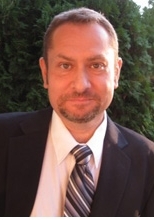

Yana Prymachenko: Dr Yekelchyk, today Ukraine is once again fighting for its independence, and Russia is once again the aggressor. Why were Ukrainians unable to secure independence during the national liberation struggle of 1917–1921? You’re currently working on a book that seeks to answer this question. What conclusions have you reached?
— I would single out three main reasons. First, it is the level of national mobilization – or more precisely, political mobilization for the national cause. We are talking about the nature of Ukrainian society at the time, and how much it saw itself as a distinctly Ukrainian society. A noticeable difference existed between the events of the Ukrainian Revolution in Eastern Galicia, which was part of the Austro-Hungarian Empire, and the course of the Ukrainian Revolution in the former Russian Empire.
In Galicia, Ukrainians had Prosvita (Enlightenment) cultural clubs in the countryside,[1] newspapers and journals were being published freely in Ukrainian, and ordinary people had experience of political activism. Ukrainians were represented in the parliament as well as in local legislatures.[2] All of this fostered an awareness that domestic politics within the Austro–Hungarian Empire were structured along ethnic lines. Whether that was a good or bad thing is another matter, but it contributed to the national mobilization of the population, which by the 1890s began to dentify as Ukrainians (before that, as Rusyns or “Ruthenians”). By the time the First World War began, Galician peasants were already conscious of their national distinctiveness as Rusyns or Ukrainians, as separate from Poles and Austrian Germans.
In the Russian Empire, the political status of Ukrainians was incomparably worse. The imperial authorities insisted that they were “Little Russians” – a regional subgroup of Russian people. The Prosvita societies were first established only after the Revolution of 1905, but the majority had already been shut down by 1909–1910. As of 1912, there were practically no functioning organized Ukrainian institutions left in the Russian Empire. The Ukrainian-language newspaper Rada, which had been published from 1905 to 1914, was closed with the outbreak of the First World War. By some miracle, only the Katerynoslav Prosvitamanaged to survive until 1916. The vast majority of the population had no experience of political life or national organization whatsoever.
In fact, the first genuine experience of legal political activity for Ukrainians in the Russian Empire began only in 1905. However, this experience was rather limited, as only Ukrainian moderates, represented by the URDP party,[3] managed to gain seats in the First Duma due to their alliance with the all-Russian Cadet (Constitutional-Democratic) Party.
The political mobilization of Ukrainians in the Russian Empire around the idea of Ukrainian statehood truly began during the First World War, thanks to the propaganda efforts of the Union for the Liberation of Ukraine (SVU).[4] This émigré organization published over a million books, pamphlets, and leaflets advocating for the distinctiveness of Ukraine, which the Germans made available to Russian POWs conscripted from Ukraine. These publications included a map of Ukraine as a hypothetical nation-state created by Stepan Rudnytskyi.[5] It was largely due to the activities of the SVU that the name “Ukraine” gained wider usage. The books and leaflets were distributed among soldiers at the front, who would bring them back to Ukrainian villages when they returned home. These soldiers became the driving force behind the political mobilization of the Ukrainian countryside. However, political developments unfolded so rapidly that there was little time for a modern political Ukrainian national consciousness to take root.
As a result, Ukrainian peasant soldiers from Eastern Galicia, which had been under Habsburg rule, went to war for the national cause in 1918–1919 as a regular army, whereas the Ukrainian peasant soldiers from the former Russian Empire dispersed, being prepared to defend only their own villages and crops.
So, you essentially believe that one of the contributing factors to the failure was the delayed nation-building processes among Ukrainians living in the Russian Empire, correct?
— It was not the only one. Unfortunately, Ukrainian politicians of the time did not fully grasp the nature of a peasant revolution. As it happened, the revolutionary wave brought the Ukrainian Social Democrats to the forefront,[6] and they assumed leadership of the Ukrainian national liberation struggle. They kept looking for a Ukrainian working class but found practically none. In fact, it was the Ukrainian Socialist Revolutionaries[7] who should have played the leading role as not only were they more numerous, but in 1917 they also had substantial support in the countryside, which formed the social foundation of the Ukrainian Revolution.
The central thesis of my book on the Ukrainian Revolution is that the Ukrainian political elite failed to understand how the peasantry mobilized politically, as well as which forms of armed resistance it was effective at – and which it was not. In the spring of 1917, when hundreds of thousands of soldiers in the Russian army declared themselves Ukrainian and expressed their desire to defend Ukraine by transferring to Ukrainianized military units, these soldiers were not simply unwilling to die in the trenches for the Russian Empire – they did not want to die in the trenches at all. The peasants wanted to get home and participate in the seizures of the crown land and large private estates.
This was an anti-war mobilization. However, Ukrainian politicians rejoiced at the unexpected mass support and organized parades. The “grandfather” of the Ukrainian Revolution, Professor Mykhailo Hrushevsky,[8] who was only in his early fifties, happily reviewed these parades. Only later did Ukrainian politicians realize that this was not a mobilization in defence of Ukraine as a nation, although the peasantry were prepared to defend their native villages. The soldiers had certain expectations: that they would be withdrawn to the rear, where reorganization would take place, where Ukrainian units would be formed and stationed within Ukraine; and that the world war would not continue. There was an expectation that land would be redistributed in favour of the peasantry. It was about a desire to live and serve in Ukraine, but not to fight for Ukraine!
This determined the nature of the Ukrainian Revolution as it featured peasant resistance to all those who came to take produce from them but a failure to build a hardened regular army. The local nature of peasant resistance also produced a specific form of peasant warlordism, otamanshchyna, which undermined the efforts to create a regular army and hindered state-building in general.
In contrast, hungry, unemployed workers and former soldiers from Russia eagerly abandoned their homes to march into Ukraine, where they would requisition grain and other produce.
I would go even further: for a long time, even Ukrainian historians failed to understand the nature of this anti-war mobilization among the Ukrainian peasantry in 1917.
And how do you understand this phenomenon?
— At some point, I also believed that Ukrainian politicians from the left spectrum wanted to dissolve the army, and that it was precisely because of them that Ukrainian statehood did not survive. But as I delved deeper into the topic, I began to understand that the Ukrainian politicians had no other choice because these so-called Ukrainian regiments were either switching sides to the Bolsheviks or declaring neutrality in the war between the Bolsheviks and the Ukrainian People’s Republic (UNR). In fact, the Ukrainianization of the army in 1917 occurred during a period of popular anti-war mobilization, which had to run its course. The old army and the Ukrainianized formations needed to be disbanded, and a new Ukrainian army needed to be created.
Incidentally, one of the first to grasp and articulate the dilemma of anti-war mobilization was Symon Petliura, who belonged to the moderate wing of the Ukrainian Social Democratic Labor Party. It was he who called things by their proper names, stating that what the republic was dealing with was a deserters’ movement presenting itself as a movement for the creation of Ukrainian regiments.
But even he stopped short of embracing the grassroots response of the Ukrainian peasantry to the looting and violence by the Russian soldiers returning from the front lines – the spontaneous movement of the Free Cossacks. It was seen as right-wing – a potential social base for a conservative dictatorship.
Earlier you mentioned three sets of reasons. What was the third factor?
— The third one had to do with the formation of the Ukrainian political elite at the time. The ideology of social democracy did not reflect the condition, structure, or expectations of Ukrainian society during the revolution. When Marxist thought began spreading in Ukraine, most of he young Ukrainian intelligentsia viewed it as the most modern theory of political action. Marxism offered a scheme of historical development in which the working class played the leading role – a vision shared by the famous writer Lesia Ukrainka.[9] This created the expectation that the working class should become the leading force of the revolution and of the future.
Ukrainian Social Democrats were sure that some Ukrainian workers saw their interests as different from those of the Russian and Russified workers in Ukraine’s cities. Social Democrats also had a problem with the notion of land as private property, which conditioned their peculiar reading of the Ukrainian peasantry and its interests.
However, the problem was that the working class in Ukraine was either assimilated by the Russians or entirely Russified. As a result, the working class remained within the framework of the Russian colonial discourse, an important element of which was disdain toward the Ukrainian peasantry on account of the language they spoke. The workers considered themselves a higher, more educated Russian caste, while Ukrainian villagers were relegated to the role of uneducated, uncultured natives.
Thus, literal adherence to Marxist doctrine would have pushed Ukrainian politicians down a colonial path, one that was fundamentally unacceptable to them from the outset as it would have equated them with the Bolsheviks. In this context, the most illustrative example among Ukrainian politicians is the writer Volodymyr Vynnychenko. He tested, in practice, how close one could draw near Bolshevik ideology without becoming a Bolshevik, while still remaining an independent Ukrainian political actor. As is well known, Vynnychenko’s experience demonstrated that this was impossible.
What did Ukrainian Social Democrats do to adapt Marxist ideas to Ukrainian realities?
— In a sense, Ukrainian Social Democrats were ahead of their time in anticipating the emergence of postcolonial studies. Their theoretical solution to the problem – the one developed only during and after the Ukrainian Revolution – lay in proclaiming that an entire nation could be an oppressed, proletarian nation, even if that nation consisted predominantly of peasants. Under conditions of national mobilization, Ukrainian Social Democrats might have secured broad support among the peasantry; for objective reasons, however, this did not work out. As a result, we observed a fundamental split within this political current.
On one side, there was Lesia Ukrainka, who valued Marx’s ideas but was above all committed to the Ukrainian national cause. On the other side stood Pavlo Tuchapskyi,[10] who became a leading Marxist figure in Ukraine, one of the founders of the Russian Social Democratic Party, a participant in the First (Minsk) Congress of Russian Social Democracy, and so on.
A similar situation can be observed within the Ukrainian student circle at Saint Petersburg University, where two prominent leaders, Dmytro Doroshenko[11] and Hlib Bokiy,[12] followed radically opposing paths.
Hlib Bokiy became a committed Bolshevik and one of the founders of the Cheka, the Soviet secret police. A steamship that transported political prisoners to the Gulag was named in his honour. And yet he was a Ukrainian student, an activist of the 1900s, who chose the Bolshevik path because that political alignment was identified with the working class concentrated in the cities, in factories, even though it was, at its core, a colonial approach in relation to Ukraine. The Bolsheviks preferred not to speak of this, but they were well aware that in the cities of Ukraine – as well as in Central Asia, which was in fact a textbook example – they were relying on a working class that represented a colonizing group, one that spoke the language of the colonizer and looked down on the local population.
Here, the primary issue is not the ethnic background of the urbanites, but a class-based one. All those Russians, Jews, and Poles belonged to the petty urban bourgeoisie. They looked down on the peasantry. Thus, Ukrainian politicians were faced with a serious dilemma: what to do with the Russified cities, where Ukrainian ideas were not just unpopular but actively rejected?
In essence, Ukrainian politicians tried being Marxists without a working class – the dilemma of many anti-colonial movements during the twentieth century – but that did not work because the working class was very much present yet identified with the colonizers. The Bolshevik capture of Kyiv in February 1918 effectively marked the end of those social-democratic illusions. Tellingly, the last issue of the Ukrainian Social Democratic newspaper before the abandonment of Kyiv published the final, desperate appeal to “Ukrainian workers” in Russian. The Ukrainian Social Democracy did not draw proper lessons from this fiasco until after the Revolution, and switching its attention to the peasantry did not help matters either because the party theoreticians could not accept as genuine the peasants’ interest in acquiring more land as private owners.
How would you position the Ukrainian Revolution in a European and global context? More broadly, what did the rest of the world know about Ukraine at the time? What sources did foreign audiences rely on for information about Ukraine?
— For us, scholars of Ukrainian history, it sometimes seems that the challenging conditions for the national movement in Ukraine were primarily a result of the oppression of Ukrainians by the Russian Empire. Because of this, the Ukrainian Revolution could not fully develop as a national revolution. But what about the crushing weight of unfavourable geopolitical circumstances?
Let us consider a counter-example. Was national mobilization more advanced in those regions of the former Russian Empire that did succeed in establishing national states? I am referring, above all, to Lithuania, Latvia, and Estonia. Did Latvia not produce the staunchly pro-Bolshevik Latvian Riflemen?
One of my graduate students conducted research on the establishment of independent Latvia and I learned a lot from his thesis. I had previously assumed there had been strong national mobilization there – language, culture, and a long history of struggle against the German landowners who held the land, and later against the Russians. However, a detailed study of the history of the Latvian revolution showed that the anti-Russian mobilization never really took off. The decisive contribution was made by the British Navy. The key moment was Admiral Henry Cowan’s[13] order to open fire on the joint White Russian and German force that was confronting the Latvian and Estonian units. That proved to be the turning point. The Germans and Russians scattered. The battle was subsequently proclaimed a major victory for the Estonian and Latvian armies over the combined Russo-German forces, leading to the emergence of independent states.
A global perspective on the history of the Ukrainian Revolution is important because it allows us to see how much depended on the national movement and how much on the position of the great powers. In the summer of 2022, as I was doing research in the archives of the British Foreign Office, I was struck by the documents concerning the situation in Odesa. According to the division of zones of responsibility, the British were in charge of the northern parts of the former Russian Empire and the Caucasus, whereas the French oversaw Ukraine. The impression of the British diplomats and military attachés was that France itself did not know what it wanted to achieve in Ukraine. The positions of the military and the French government were constantly shifting. The whole situation was not, in their opinion, taken seriously.
As for the fate of the peoples of the Caucasus, there was a well-known dispute between Lord Curzon[14] and Churchill about whom Britain, based on its strategic interests, should support in the Caucasus. Should those be the national republics, or should “Russia” be restored in some form? With regard to Ukraine, the Entente did not even consider the possibility of separating Ukraine from Russia. The West felt that it had certain obligations to Russia as a former ally in the First World War, with whom there had been important agreements, including secret ones. Recognizing that some parts of the former Russian Empire might become independent countries was extremely difficult for Western diplomacy. Poland was recognized as independent, but Ukraine was regarded as part of Russia – the Western diplomats and military officers basically made any assistance to Ukraine conditional on recognizing the authority of the Russian White army. The West procrastinated until after the Bolsheviks had consolidated their power. By that time, it was too late to support Ukraine as the Entente had already lost its military strength.
Can the loss of military strength that you just mentioned be seen as evidence that the Entente countries had grown weary of war?
— By 1918, fatigue from the war was beginning to be felt in all the armies of the First World War, which in turn influenced domestic politics in the Entente and Central Powers. Bolsheviks were quite skilful in exploiting these sentiments. They ramped up anti-war propaganda among the Entente forces stationed in Ukraine, especially using the story of Jeanne Labourbe,[15] a French citizen whose execution by the White Army with the approval of the French caused a scandal in the French parliament. The only army that actually attempted to take any real action during the Allied landing in the Ukrainian South was the Greek army.
Can one say that the Greek interest in the territory was linked to the history of Greek colonization of the Northern Black Sea coast and the Azov region?
— Firstly, the Greeks were late to claim their share of the territories that had become available as a result of the First World War. Secondly, yes, of course the Greeks had their own national interests in the region, including the ethnic Greeks living there, in connection with the notion of the Greater Greece (the Megali idea). I’m referring to the Azov Greeks – the Urums[16] and the Romaioi living in southern Ukraine.[17] The Greek soldiers were prepared to fight, and they could win some battles but they could not win the war, as the Bolshevik-led resistance was becoming framed in terms of a “Russian” struggle against foreign intervention. This resonated with the Russian nationalist (perhaps ‘imperial’ would be a better term) sentiment. In December 1919, Stalin wrote in his article “On the Military Situation in the South” that the interventionists and the nationalist governments on the periphery had tried to suppress the Russian revolution but failed because the Russian working class, and thus all of what he called “inner Russia”, supported the Bolsheviks. Of course, he was deceiving himself because there was no longer a working class – they were all unemployed. But from a pragmatic standpoint, Stalin was right. Unemployed Russian workers eagerly joined the food procurement expeditions to Ukraine and took administrative positions in what they called Southern Russia. Objectively, they represented the empire, the colonizing power.
But that is not all. There is another small but noteworthy nuance. When the Russian Civil War started in the spring of 1918, the Entente put its hopes in the Whites – although it would eventually settle on profitable trade with Bolshevik “Russia” in the 1920s. The only time the Entente was genuinely interested in Ukraine was in the summer and fall of 1917, when it appeared that the Central Rada had strong support among the soldiers of the disintegrating Russian army. The Ukrainian politicians did not yet have a clear position on foreign policy because that was seen as the prerogative of the all-Russian Provisional Government, and also because there were no easy solutions for Ukraine that would not come with serious political liabilities. Nevertheless, the Ukrainian politicians informally cast their lot with the Entente – either by inertia, because such was the position of the Provisional Government, or because that was a more progressive, democratic choice than the conservative empires constituting the Central Powers. The Ukrainian government tried to consolidate the Southwestern and Romanian “Fronts” (the Russian term for groups of armies) of the Russian army with the addition of the Ukrainianized military formations into a single “Ukrainian Front” that would hold the front line. Privately and in some interviews, Ukrainian politicians assured the Entente representatives that the Ukrainian army then being created would hold the front. When the Rada finally made an official statement about the First World War in its Third Universal, it expressed a wish for a just peace, but also for holding the front until that peace was achieved. This did not sit well with the soldiers.
From the very beginning, the Bolshevik policy was centred around satisfying the desires of the soldiers. Want to end the war? Go ahead, end it now, you will not be punished if you desert. Lenin had no intention of negotiating with the Entente. From the outset, his focus was on reaching an agreement with Germany. That is why it was so easy for him to propose an immediate ceasefire and the start of peace negotiations over the radio in December 1917. The Ukrainian side was caught unprepared. After hearing about the ceasefire, the Rada debated the Ukrainian position. As Vynnychenko explained it, the greatest problem was losing the support of the masses who wanted an end to the war. The Rada had no other option but to join the negotiations with the Central Powers at Brest-Litovsk. It did so after making the last rhetorical gesture toward the Entente – calling for the freed German troops not to be transferred to the Western Front. However, the circumstances at Brest-Litovsk favoured the Ukrainian delegation. Trotsky headed the Russian delegation, carrying clear instructions from Lenin to drag out the negotiations. He wrote about this in his memoir My Life, at the beginning of the chapter ‘Brest-Litovsk’.[18] The plan for world revolution was simple at first: keep the negotiations going until revolutions start happening in other belligerent countries. During this impasse, the Germans discovered they could use Ukraine as leverage against Russia, and the Ukrainians realized that they could use Germany to extract concessions from Austria-Hungary.
This would mean invalidating the promise made informally to the Entente, but the UNR could not deliver on this promise in any case. The Entente itself was cynical in its policy toward Ukraine. It deployed special representatives with no clear mandate, like John Picton Bagge.[19] Some Ukrainian contemporaries claimed that he was an ambassador to the Ukrainian government and equated his appointment with the Entente’s formal recognition of the Ukrainian government. In reality, these special representatives were there to monitor and probe the situation; they would often make statements they were not authorized to make.
Would you say this was a deliberate provocation on the part of the Entente representatives to see how Ukraine would react?
— In a way, yes. It was about testing the limits of what was possible without promising too much in exchange, especially in writing. In the Foreign Office documents I worked with, there were cryptic references to funding a trip to Ukraine by a senior British officer, although the purpose of his mission was never clearly defined. British intelligence was operating in the region as well. Ukrainian contemporaries saw the arrival of the British and French representatives as a form of diplomatic recognition. Some Ukrainian history textbooks even claim that the Entente recognized the UNR. However, in their reports the diplomats wrote that the Ukrainian government seemed very cooperative yet lacked the support of its own army and, therefore, the conversations would not have resulted in anything concrete. Promises of military supplies made no sense because the army was disintegrating. If not holding the front, these representatives asked to at least not sign a separate peace with the Central Powers, but the UNR had no choice at that point but to follow the example of the Bolsheviks and send a delegation to Brest-Litovsk. Bagge stayed in Kyiv and sought to establish contact with Bolshevik dignitaries instead. Meanwhile, a French agent without any written mandate, Emile Henno, provided funds for the Russian nationalist circle in Kyiv that formed around Vasily Shulgin. Then, in 1918, Henno and an unnamed British representative in Ukraine funded the Azbuka, Shulgin’s private intelligence agency, which was working for the Whites. This comes up in Fabian Baumann’s fascinating book about the Shulgin family.
So, when did the UNR miss the window of opportunity for developing a successful foreign and domestic policy?
This is a great question. I think the tragedy of the Ukrainian Revolution was that the national elites were not yet prepared to put forward the slogan of national independence in 1917, when their public support was at the highest. They were reluctant to break ties with Russian “revolutionary democracy”. The leading Ukrainian politicians also, as we discussed earlier, misunderstood the reasons for their public support and the desires of the Ukrainian peasantry.
In general, September 1917 was a crucial turning point. At this time, soldiers from the front began returning home en masse: some deserted, while others made use of the army’s nationalization program by joining Ukrainianized military formations (quite a few of those regiments were also self-proclaimed). The flight of soldiers from the front triggered a wave of violence in the countryside. At first, the peasants might have seen it as an opportunity to seize land. At that point, it appeared that the Bolsheviks were gaining more sympathy among the peasantry. As Yevhen Chykalenko,[20] who owned an estate in Kherson region, recalled in his memoirs, peasants pointed out quite openly that the Bolsheviks “had better slogans”.[21] The Bolsheviks simply told them to take all the land they could seize. It was not land reform, but permission to plunder.
The Ukrainian authorities did not have a clear message for the peasants indicating they also supported immediate and radical land reform. Of course, the Socialist Revolutionaries’ belief that Ukrainian peasants wanted the land to be socialized played no small role in this situation. As Vladyslav Verstiuk and other researchers rightly indicated, this reveals a complete misunderstanding of the peasants’ actual desires. Ukrainian villages had a different social structure from Russian ones, with practically no communal ownership. The Bolshevik gamble paid off at first: let the peasants seize all the land they want and portray it as a wonderful Bolshevik policy. However, things changed quickly when Bolshevik grain-requisitioning detachments began arriving in the countryside. It is just that they started arriving later in Ukraine than elsewhere, which kept the peasants fooled about the Bolsheviks for longer.
Are we talking about some form of national consciousness among Ukrainians during that time, particularly among the peasantry? Did the First World War act as a catalyst? And did the peasants have any real alternative in 1917–1918?
— I believe that the peasantry had an awareness of its cultural distinctiveness, and this awareness held political value for them. In 1905, Ukrainian political parties were demanding Ukrainian-language schools, which was positively received in the countryside. The peasants made this one of their demands, so there was an awareness of linguistic distinctiveness. But whether that awareness was enough to lead the peasantry to support this or that political party is a different question.
The peasants decisively turned against the Bolsheviks in 1920–1921, when all the Ukrainian governments were in exile, the UNR army had already been disbanded, and its former soldiers were in Polish internment camps. Under the Bolshevik policy of war communism,[22] the colonial nature of the new regime became clearly visible, and that is when the peasants began to perceive themselves as part of Ukraine. They begin to see it as a political alternative to the Bolshevik rule. At the same time, from a theoretical standpoint some Ukrainian Marxists denounced Bolshevik policies in Ukraine as colonialist policies – the subject of Stephen Velychenko’s interesting book.
One can track this shift through the stories of the peasant otamans in such famous loci of resistance as Chornyi Lis (Black Forest) and Kholodnyi Yar (Cold Ravine),[23] whom the peasantry began to glorify in the early 1920s. These otamans hearkened back to the UNR. They received emissaries from the UNR structures in Europe and spoke about continuing the struggle. By then, however, it was too late. The UNR had already lost.
The peasant memory held on to this Ukrainian project. It came back as a political alternative with pre-existing political language because the Bolsheviks had looted the countryside, executed those who resisted, used starvation as a political tool, and so on. The Bolshevik pressure on Ukrainian peasants persisted all the way until the Holodomor.
By the way, one of the key theses in the final chapter of my book is that the Holodomor represents, in essence, the social conclusion of the Ukrainian Revolution. Politically, the revolution ended in the fall of 1920, when the UNR leadership and the army crossed into Poland. The final attempt to change its course was the Second Winter Campaign of the UNR Army in 1921[24] – a partisan raid that ended in disaster, for which the UNR leadership in Poland would later reproach themselves. However, it was the attempt to join forces with the very same otamans in Ukraine who now saw the UNR banner as valuable.
The idea of the UNR lived on in peasant memory all the way through the Second World War, when some peasants asked whether Petliura was coming back with the Germans.
What was the memory of the Ukrainian People’s Republic among the Ukrainian peasantry?
— In Dnipro Ukraine (Mykhailo Drahomanov popularized this wonderful term to avoid referring to the Russian-ruled Ukraine as Russian, tsarist, or imperial), the Ukrainian Revolution was a powerful social movement that ultimately failed to be channelled into a Ukrainian political project, therefore it was effectively lost. This anti-war and peasant-insurgent mobilization potential might have worked if combined with something like the First Winter Campaign,[25] when soldiers of the UNR army were warmly welcomed by the peasants. Had it happened earlier… In truth, I cannot imagine a politician in Ukraine at the time who could have united these movements. That would have required a decisive rejection of the prevailing political standpoints of the era. In early 1919, Petliura did move in this direction for strategic reasons (to placate the Entente, which did not care anyway), but it was too late. Moreover, he lacked the necessary strength of character. Contemporaries, including his close collaborator and one-time Prime Minister Isaak Mazepa, explicitly noted that Petliura (as well as, incidentally, Skoropadsky) had a habit of listening to all his political advisers without expressing his own opinion, thus bringing the meeting to an inconclusive end. Such a style of leadership had unfortunate consequences.
Why did the awareness of cultural distinctiveness become such an important factor in the Ukrainian Revolution?
— In general, Ukrainians succeeded in preserving their identity in the era of modern politics. Moreover, this national identity became the foundation for the right to self-determination. Even Lenin could not deny it. In 1919, upon seeing the statistics from the elections to the Constituent Assembly held in the autumn of 1917 (and taking into account the subsequent resistance in Ukraine), he was forced to admit that Ukrainian parties were backed by the Ukrainian peasantry, which had to be reckoned with. Therefore, in order for the Bolsheviks to govern Ukraine, it was necessary, at least formally, to allow the free development of the Ukrainian language and culture.
Our discussion of the Ukrainian Revolution of 1917–1921 revolves around the issues of the army and language. Allow me then to ask about religion and faith. What mattered more for the idea of Ukrainian distinctiveness – language or religion? If we draw comparisons, is the Ukrainian national project more akin to the Yugoslav model or to the pan-national Belgian one? Can we differentiate between Orthodox Ukrainians and Greek Catholics of Western Ukraine in the same way as Serbs and Croats can be differentiated?
— The presence of a secularist, anti-religious vision of Ukrainian identity among the leaders of the Ukrainian Revolution was connected to the understanding that the Russian Orthodox Church, imposed by the tsarist empire, was so thoroughly permeated with an imperial spirit that it compromised the notion of any state religion and religion as such. Being a socialist politician also meant not caring much about a national church. Remember Volodymyr Vynnychenko’s quarrel with Petliura about not holding a religious ceremony during the Directory’s entrance in Kyiv in December 1918? In addition, it was simply impossible to create a powerful, independent Ukrainian Orthodox Church during revolutionary times. The creation of a separate Ukrainian Orthodox Church was declared as a goal, but it became a significant component of the national project already in exile. By the way, Skoropadsky also refused to support a separate Ukrainian church, and he did not endorse the proposal to lift the church anathema on Hetman Mazepa.
Metropolitan Sheptytsky’s contemporary project to unite all Ukrainians in the bosom of the Ukrainian Catholic Church was equally unrealistic. In general, during the Ukrainian Revolution in Dnipro Ukraine and Western Ukraine, we are speaking of two revolutions. Galician politicians generally avoided the term “revolution” altogether, viewing the process instead as a political transformation legitimized by the imperial decree and aimed at developing the autonomous foundations of national and imperial life. We are dealing with two different political systems that found it difficult to understand one another. The Act of Unification,[26] in essence, did not take place, although we continue to celebrate it annually.[27]
Moreover, there was an unofficial agreement that the unification would not be carried out and the territories of the Western Ukrainian People’s Republic (ZUNR) would remain fully autonomous. There was no intent even to unify the two governments. This was politically complicated as the government of the UNR was predominantly composed of Social Democrats and Socialist Revolutionaries (although Petliura formally withdrew from the party), whereas the ZUNR government was made up of much more moderate National Democrats. This generated political tensions. There are many episodes that reveal mutual scepticism. Consider, for example, the instances when military aid was sent to Galicia, but the Ukrainian Galician Army (UHA) rejected these unreliable detachments. Or the episode when Petliura warned the Galicians that delaying land reform would result in a social catastrophe.
Thus, had the Ukrainian Revolution succeeded, the Ukrainian national project might have resembled either the Yugoslav model or the pan-national Belgian one?
— No, I think the revolution could not succeed, in part for the same reasons that would also have prevented the establishment of a dual state structure. The relationship between Serbia and Croatia lends itself more readily to comparison with that of Russia and Ukraine. A comparison with Belgium would have worked for Piłsudski’s idealistic vision of a federation of several Eastern European nations led by Poland. But of course, the reality on the ground was the Polish colonial reconquest of Vilnius and Lviv. Such a federation would also get attacked by Hitler and Stalin in 1939. Belgium also springs to mind in another respect. For decades, history textbooks on the First World War in the West began with the so-called “rape of Belgium”. The German army invaded Belgium, and Europeans had to go to war in order to stop it. Yet present-day historians begin to recognize that Ukraine’s role in the First World War was significantly greater, although Ukraine’s struggle for its national identity has never been recognized as part of that war. Historians also need to show just how vital Ukraine, as the “breadbasket of Europe”, was in the Great War.
In his book Towards the Flame: Empire, War and the End of Tsarist Russia,[28] the British historian Dominic Lieven wrote that the First World War was essentially about the fate of Ukraine and the possession of its land and resources. Would you say that Ukraine is the “powder keg” of Europe?
— I teach a course on the history of the Eastern Front in the First and Second World Wars. I developed it myself and have been teaching it for a very long time. So, when I came across this claim in Lieven’s work, I could only note that this has long been the central theme of my course. But it is good that he has finally come to see it. Clearly, Ukraine plays a significant, albeit entirely unrecognized and overlooked by Western historians, role in twentieth-century European history. That role is now coming into focus, as a growing number of books are being prepared and published about Ukraine.
You’ve already mentioned Russian colonial policy and the challenges of national mobilization within Ukrainian society during the time of the Ukrainian Revolution. In contemporary Ukrainian historiography, there is an ongoing debate about whether Ukraine was a colony of the Kremlin. Do you believe that the colonial framework is an appropriate analytical lens for examining the Russian-Ukrainian or Polish-Ukrainian past?
— In the summer of 2023 at a conference in Edmonton,[29] I presented a paper precisely on this topic.[30] In my paper, I argued that decolonial methods and approaches are indeed quite relevant for analysing the Ukrainian situation. They help to uncover existing cultural hierarchies, the nature of economic exploitation and the roots of social inequality. Concepts such as class and race do not always apply to the Ukrainian context in a straightforward way. In the case of Ukraine, imperial superiority takes on a very specific form. The empire’s open hostility toward Ukrainians becomes apparent the moment they begin to define themselves as a distinct political nation. In the Russo-Ukrainian case, this can be clearly observed in the history of attempts to establish a Ukrainian state. Ukrainians immediately become “the other” to the Russian Empire when the question of statehood is raised. In the Polish-Ukrainian case, things are somewhat more complex, given the presence of a religious barrier.
Incidentally, the Russian case is not entirely straightforward either. On the mental maps of tsarist Russia and Stalin-era Soviet Union, there existed a traditional triad of the Orthodox East Slavic peoples: Russians, Ukrainians, and Belarusians. This triad never disappeared. The Soviet Union inherited and incorporated it into the official framework of the “friendship of peoples”.[31] Moreover, Georgia was added to this grouping within the USSR as it was also considered an Orthodox country. In addition, it is the homeland of Comrade Stalin. Claire Kaiser wrote a good book on Georgia being a special case.[32] Thus, a familiar and traditional understanding rooted in a religious-imperial tradition continued to be employed.
Ukrainians were incorporated into the Russian imperial project by default. That is to say, unless one explicitly said “no”, it was assumed one agreed to assimilate and serve the empire. There are numerous examples of ethnic Ukrainians rising to the highest ranks of the Russian Empire and the Soviet Union. For example, Bezborod’ko,[33] who began his career as a Cossack officer in the Hetmanate, ended up a Chancellor of the Russian Empire. In other words, individual integration into the project was always possible. However, when an ethnic group begins to define itself as a distinct community, the empire starts to perceive it as “the other”. The Ukrainian case is far more complex than the classical model of colonial dependency. Therefore, it requires new categories, a new language of analysis.
In my article,[34] I propose that the term epistemic sovereignty be used within the field of historical scholarship as a means of understanding this process of mental emancipation.
For Ukraine, liberation from the Russian imperial project involves a conscious choice in favour of an alternative path of development. At some point in their history, Ukrainians must reject the concept of the East Slavic triad and the idea of religious unity, as well as the tradition of advancing their careers in Moscow, and so forth. For centuries, Ukrainians had the opportunity to pursue advancement within the imperial centre, and shedding that habit was no simple task. Paradoxically, genocidal attitudes toward “the other” often stem from profound cultural proximity. I am not an expert on the Polish-Ukrainian case, but it, too, seems to have permitted the possibility of assimilation.
Overall, Russian aggression in Ukraine has intensified anti-colonial discourse. In your view, is it justified that some historians in the West use an overly simplified model of Ukrainian history to mobilize Western public opinion in support of Ukraine?
— I am not aware of many such cases, fortunately. Western scholarship – and, indeed, the Ukrainian diaspora – have changed fundamentally. This, incidentally, is the central thesis of my book Writing the Nation. Our habitual thinking sometimes assumes that the diaspora consists of politically motivated individuals stuck in the realities of the 1940s. In fact, it is now a new generation, one that has received an excellent Western education and has become professionals in their respective fields. A new generation of Ukrainian historians raised in the diaspora joined the profession in the late 1970s and early 1980s. It was they who brought attention to the fact that the concept of nation is complex and multidimensional; that the process of national mobilization is not linear; that national mobilization requires access to the masses; and that international politics can rewrite accomplishments or compensate for shortcomings in the process of nation-building. All of this was introduced into Ukrainian historiography by Western scholars, primarily representatives of the Ukrainian diaspora.
Currently, a second edition of my book Ukraine: Birth of A Modern Nation is being prepared for publication. The book’s central argument is that modern Ukraine emerged from the Ukrainian national project, which, in essence, was based on the principle of ethnic mobilization and the right of an ethnic nation to statehood. However, from the very beginning of imperial collapse, that is since the spring of 1917, Ukraine was a multiethnic state on the mental map of Ukrainian intellectuals. The inclusion of minorities is clear in Hrushevsky’s collection On the Threshold of a New Ukraine, published during the Ukrainian Revolution. Many decades later, near the end of the Soviet Union, the same inclusive vision of Ukraine appears in the protocols of the Narodnyi rukh (People’s Movement, a Ukrainian popular front). This understanding of Ukraine became further entrenched during the Revolution of Dignity and in the ongoing war against Russian invaders.
Thank you for this engaging conversation.
Interview conducted by YANA PRYMACHENKO
[1] Prosvita was a cultural and educational organization that emerged in the late nineteenth century in Western Ukraine (particularly in Galicia) with the aim of promoting national self-awareness and education among the Ukrainian people. Over time, Prosvita’s activities expanded to other regions of Ukraine, playing a crucial role in the development of national identity.
[2] Ukrainians had representatives in the Reichsrat (the parliament of the Austrian part of the empire) as well as in the local diets (sejms) of Galicia and Bukovina. Ukrainian parliamentarians played an important role in actively defending the rights of the people; among them were Yulian Romanchuk, Ivan Franko, Kost Levytskyi, Yevhen Petrushevych, and others. Their activities had a significant impact on the formation of the Ukrainian political elite and the development of the national movement.
[3] The Ukrainian Radical Democratic Party (URDP) was a political party founded in 1905 in the Russian Empire. It represented the liberal-democratic current among the Ukrainian intelligentsia and aimed at national revival and the democratization of political life.
[4] The Union for the Liberation of Ukraine was a political organization founded by Ukrainian émigrés in 1914 in Lviv, during the First World War. Its goal was to achieve Ukrainian independence through cooperation with the Central Powers (Germany and Austria-Hungary), which were at war with the Russian Empire.
[5] Stepan Rudnytskyi (1877–1937) was a Ukrainian geographer, cartographer, and Soviet academician. His works laid the foundation for the study of Ukraine’s geography and its geopolitical position in the world.
[6] The Ukrainian Social Democratic Labor Party (USDRP) was founded in December 1905 in Kyiv. Its establishment resulted from the unification of several socialist groups operating in different regions of Ukraine. Among its founders were Volodymyr Vynnychenko, Symon Petliura, Mykola Porsh, and Lev Yurkevych.
[7] The Ukrainian Socialist-Revolutionaries, or the Ukrainian Party of Socialist-Revolutionaries (UPSR), was a political party active in Ukraine at the beginning of the twentieth century. It was one of the leading forces of the Ukrainian revolution of 1917–1921, representing the interests of the peasantry and combining socialist ideas with the pursuit of national liberation.
[8] Mykhailo Hrushevsky (1866–1934) was a Ukrainian historian and political figure, head of the Ukrainian Central Rada from March 1917 to April 1918.
[9] Lesia Ukrainka (real name: Larysa Petrivna Kosach; 1871–1913) was a Ukrainian writer, poet, playwright, translator, and public activist. She is one of the central figures of Ukrainian literature and a symbol of the struggle for national revival, freedom, and human rights.
[10] Pavlo Tuchapskyi (1869–1922) was a Ukrainian social-democratic activist and one of the founders of the Russian Social Democratic Labor Party (RSDRP).
[11] Dmytro Doroshenko (1882–1951) was a prominent Ukrainian historian, politician, publicist, and public figure, who served as a Minister of Foreign Affairs of the Ukrainian State (the Hetmanate of Pavlo Skoropadsky). He was one of the leading historians of Ukrainian statehood and the author of numerous scholarly works, including the widely known History of Ukraine.
[12] Hlib Bokiy (1879–1937) was a Soviet political figure, journalist, and member of Cheka. He was an organizer and head of the Cheka in Petrograd, taking part in the development of the GULAG system. Later, he led encryption work in the USSR. Bokiy was repressed during the Great Terror in 1937.
[13] Sir Walter Henry Cowan (1871–1956) was a British admiral and a prominent naval figure who served in the Royal Navy for over 50 years. He took part in many major conflicts, including the First and Second World Wars, and left a significant mark on British military history. In 1919, after the First World War, Cowan was deployed to the Baltic Sea. There he commanded British naval forces supporting the independence of Latvia, Lithuania, and Estonia, successfully conducting operations against Bolshevik forces and defending the Baltic states from the threat of intervention.
[14] George Nathaniel Curzon (1859–1925) was a British statesman, diplomat, historian, and one of the most influential British politicians at the turn of the twentieth century. Curzon served as Viceroy of India, Foreign Secretary, and is renowned for his role in international affairs following the First World War.
[15] Jeanne-Marie Labourbe (1877–1919) was a French revolutionary, an active participant in the revolutionary movement in the Russian Empire and Bolshevik Russia, and an organizer of the French Communist group in Moscow. She was one of the leaders of the Foreign Collegium attached to the Odesa underground committee of the Communist Party (Bolsheviks) of Ukraine, actively engaging in propaganda among French soldiers and sailors, urging them to cease their intervention against the Bolsheviks. On 1 March 1919, she was arrested by the French counterintelligence service along with other members of the Foreign Collegium. On 2 March 1919, they were executed without trial. Their bodies were later discovered in Odesa. This event provoked significant public outcry in France.
[16] The Urum Greeks are an ethnic group of Greeks who predominantly reside in Ukraine, particularly in the Donetsk region. The Urums originate from Crimea. In 1778, following the annexation of Crimea by the Russian Empire, they were resettled by Catherine II to the Azov Sea region. The name Urum derives from the word Rum, which, in Muslim countries, was used to refer to Greeks, the heirs of the Byzantine Empire. Having lived for an extended period under the rule of the Crimean Khanate, the Greeks of Crimea adopted a Turkic language as their primary means of everyday communication, although they preserved their Greek Orthodox faith and elements of Greek culture.
[17] The Romaios Greeks are an ethnic group who have preserved the Greek language and culture. They are also descendants of the population of the Byzantine Empire, which was often referred to as Romaios (from Latin Romaioi – Romans). This term was used to denote Greeks not only during the medieval period but also later, into the modern era, particularly among the Greek communities of the Azov Sea region in Ukraine.
[18] Leon Trotsky, My Life: An Attempt at an Autobiography (New York: Charles Schribner’s Sons, 1930).
[19] John Picton Bagge (1877–1967) was a British diplomat who represented the interests of Great Britain in the Ukrainian People’s Republic (UNR) during the Ukrainian Revolution of 1917–1921. From 5 December 1917 to 25 bJanuary 1918, he resided in Kyiv, maintaining constant contact with the UNR government. He collaborated with the French representative, General Georges Tabouis, seeking to secure support from the Ukrainian government for the continuation of the Entente’s war against Germany and its allies. Bagge criticized the signing of the Treaty of Brest-Litovsk between the UNR and the Central Powers on 9 February 1918. After Kyiv was captured by Russian forces under the command of Mikhail Muravyov, he remained in the city and established contacts with the Bolshevik command. He left Kyiv shortly before the entry of German troops on 22 February 1918.
[20] Yevhen Chykalenko (1861–1929) was a Ukrainian public figure, philanthropist, publicist, agronomist, and publisher. He was a member of the Old hromada, the Ukrainian Democratic Party, and one of the founders of the Society of Ukrainian Progressives (TUP). Chykalenko financed the publication of the Ukrainian newspapers Hromadska dumka and Rada and supported the journal Nova hromada. He was one of the initiators of the convocation of the Ukrainian Central Rada. After the defeat of the Ukrainian struggle for independence, he emigrated first to Austria and later to Czechoslovakia.
[21] Jevhen Čykalenko, Spohady 1861–1907 (Nʹju-Jork: Ukrajinsʹka Vilʹna Akademija Nauk, 1955).
[22] The policy of war communism (1918–1921) was an economic and political strategy implemented by the Bolshevik government during the Russian Civil War, characterized by radical methods of managing the economy and society. Its primary aim was to secure control over resources to support the Red Army and to maintain Bolshevik power. Ukrainian villages were particularly targeted under this policy: the Bolsheviks introduced a system of food requisitioning – the forced seizure of grain and other agricultural products from peasants to supply cities and the army. The confiscations were carried out by special food requisition detachments that often resorted to violence.
[23] The Kholodnyi Yar insurgents were participants of the partisan movement in the Kholodnyi Yar region of Cherkasy during the Ukrainian Revolution. They fought for Ukraine’s independence against various occupying regimes, including the Bolsheviks and the White Guards. The Kholodnyi Yar Republic was a self-proclaimed state that existed from 1919 to 1922 in the territory of Kholodnyi Yar. Its centre was Motronyn Monastery, which served as the headquarters of the insurgents. The Kholodnyi Yar forces established their own administration, judicial system, and military formations.
[24] The Second Winter Campaign, or the November Raid of the UNR Army, was a military operation that took place in November–December 1921. Its objective was to incite an anti-Bolshevik uprising in Ukraine and to restore the independence of the UNR. The campaign ended in defeat due to insufficient coordination, lack of support, and scarce military resources. The Bolsheviks organized mass purges against participants and supporters of the UNR within Ukraine. This campaign marked the final elimination of organized UNR Army resistance in the territories controlled by the Bolsheviks.
[25] The First Winter Campaign of the UNR Army (6 December 1919 to 6 May 1920) was a raid by UNR forces into the rear of Bolshevik and Denikinite lines during the Ukrainian-Soviet War. The campaign aimed to preserve the combat effectiveness of the UNR Army, support the insurgent movement within Ukraine, and demonstrate the continuity of the struggle for Ukrainian independence. On 6 May 1920, the First Winter Campaign concluded with the unification of the UNR Army with the Polish forces of Józef Piłsudski during the offensive on Kyiv. The UNR Army maintained its combat capacity and was able to participate in subsequent military operations.
[26] The Act of Unification (Act of Reunion) was a historical document that proclaimed the unification of the UNR and the ZUNR into a single sovereign Ukrainian state. The official proclamation took place on 22 January 1919, at St. Sophia Square in Kyiv.
[27] The Day of Unity of Ukraine has been celebrated annually on 22 January since 1999.
[28] Dominic Lieven, Towards the Flame: Empire, War and the End of Tsarist Russia (London: Penguin Books, 2016).
[29] ‘The Unpredictable Past: Revisiting European, Russian, and Ukrainian Historical Studies’ (11–13 May 2022, Edmonton and Banff, Alberta, Canada). The title of the presentation: ʻToward Epistemic Sovereignty: Decolonization and Ukrainian History’.
[30] Serhy Yekelchyk, ‘Toward Epistemic Sovereignty: Decolonization and Ukrainian History’, in The Unpredictable Past? Reshaping Russian, Ukrainian, and East European Studies, ed. by Volodymyr Kravchenko and Marko Robert Stech (Edmonton and Toronto: Canadian Institute of Ukrainian Studies Press, 2024), pp. 386–401.
[31] “Friendship of the Peoples” was a Soviet ideological concept asserting that all nationalities within the USSR were equal and lived in harmony, cooperating for the common good. This term was widely used in official propaganda to promote an image of unity and stability in the multinational state. For further reading, see: Vitalij Jaremčuk, Mynule Ukrajiny v istoryčnij nauci URSR pisljastalinsʹkoji doby(Ostroh: Ostrozʹka akademija, 2009).
[32] Claire P. Kaiser, Georgian and Soviet: Entitled Nationhood and the Specter of Stalin in the Caucasus (Ithaca: Cornell University Press, 2023).
[33] Count Aleksandr Bezborod’ko (1747–1799), originally from the Ukrainian Cossack nobility, was a Russian statesman, diplomat, and Chancellor of the Russian Empire.
[34] Yekelchyk, ‘Toward Epistemic Sovereignty’.